EN
EN


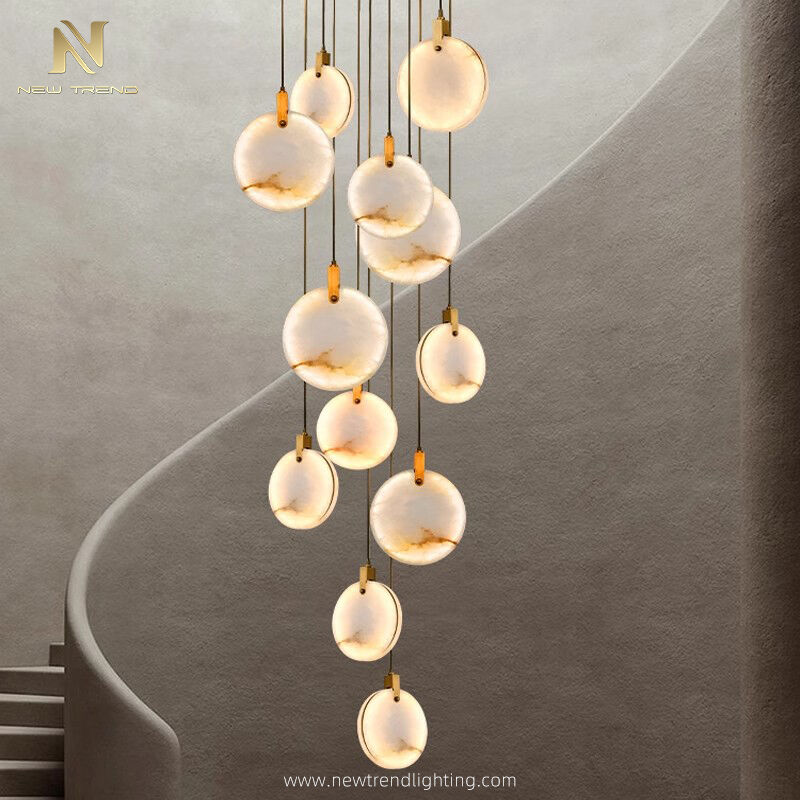
In the realm of modern architecture and interior design, lighting has evolved from a purely functional necessity into a defining element that shapes spatial experience, emotional response, and brand identity. A custom bespoke lighting factory serves as the critical bridge between conceptual architectural visions and their tangible realization, offering specialized manufacturing capabilities that transform unique design ideas into precisely engineered luminous installations. These specialized facilities combine traditional craftsmanship with advanced production technologies to create lighting solutions that cannot be sourced from standard catalogs, addressing the growing demand for distinctive illumination that reflects the singular character of high-profile commercial spaces, luxury hospitality environments, and architecturally significant structures.
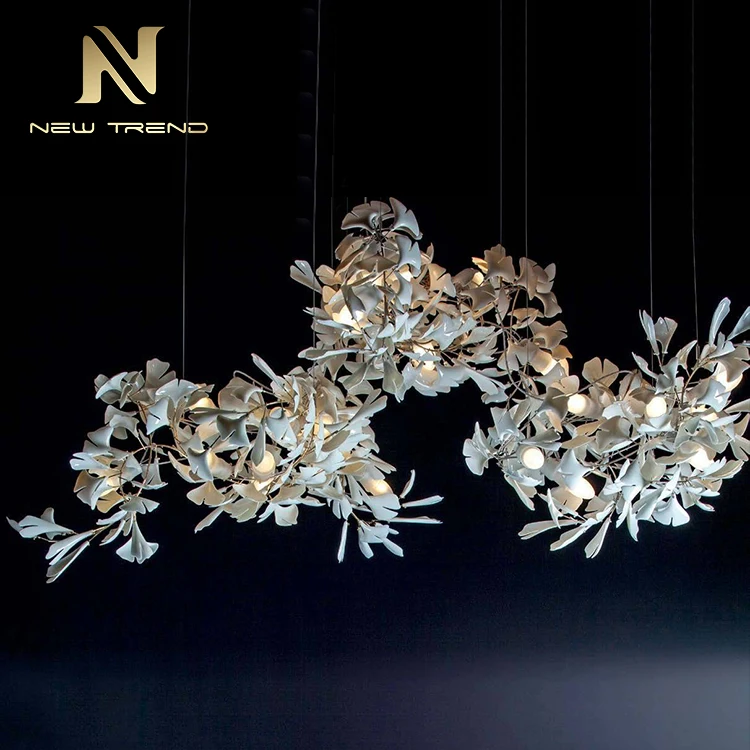
The distinguishing capability of a custom bespoke lighting factory lies in its ability to translate abstract architectural concepts into functional lighting systems that maintain design integrity while meeting stringent performance standards. Unlike mass production facilities focused on standardized output, these specialized manufacturers operate at the intersection of industrial engineering and artistic execution, employing multidisciplinary teams capable of interpreting design intent, solving technical challenges, and delivering installations that enhance architectural narratives. This transformation process requires not only advanced fabrication equipment but also deep expertise in materials science, optical engineering, structural mechanics, and project coordination, making the selection of an appropriate manufacturing partner a critical decision for architects, designers, and project developers seeking lighting solutions that truly realize their creative ambitions.
Understanding the Manufacturing Capabilities Behind Architectural Lighting Transformation
Comprehensive Design Interpretation and Engineering Development
The transformation journey begins when a custom bespoke lighting factory receives initial design concepts, which may range from detailed technical drawings to conceptual sketches conveying aesthetic intent. Experienced engineering teams analyze these inputs to identify technical requirements, dimensional constraints, material specifications, and performance expectations. This interpretation phase is crucial because it establishes the feasibility framework within which creative visions can be manufactured without compromising structural integrity or functional performance. Engineers collaborate directly with designers to refine concepts, proposing alternative construction methods, material substitutions, or dimensional adjustments that preserve design essence while optimizing manufacturability and long-term reliability.
Advanced computer-aided design systems enable precise modeling of complex geometric forms, allowing manufacturers to simulate light distribution patterns, thermal behavior, and structural loading before physical production begins. This digital prototyping capability significantly reduces development risks and accelerates project timelines by identifying potential issues during virtual testing rather than after costly fabrication. A sophisticated custom bespoke lighting factory maintains extensive material libraries and component databases within their design systems, enabling rapid evaluation of different construction approaches and accurate cost estimation during the proposal phase.
Material Selection and Specialized Fabrication Techniques
Material choice fundamentally influences both the aesthetic character and functional performance of custom lighting installations. A competent custom bespoke lighting factory maintains relationships with specialized material suppliers and possesses in-house expertise to work with diverse substrates including various metal alloys, architectural glass, specialty polymers, natural stone, exotic woods, and composite materials. Each material presents unique fabrication challenges requiring specific processing equipment and technical knowledge. For instance, working with hand-blown art glass demands collaboration with skilled artisan glassblowers, while complex metal forming may require hydroforming presses, laser cutting systems, or precision welding capabilities.
The fabrication process itself often combines traditional craftsmanship with modern manufacturing technologies. Metalworking capabilities typically include CNC machining for precision components, tube bending for structural frameworks, sheet metal forming for reflective surfaces, and various finishing processes including powder coating, electroplating, patination, and hand polishing. Advanced facilities incorporate laser cutting and waterjet cutting for intricate patterns, while maintaining skilled craftspeople capable of hand-finishing delicate surfaces or assembling complex multi-component structures. This hybrid approach allows manufacturers to achieve the precision demanded by contemporary architectural standards while preserving the aesthetic qualities that distinguish bespoke installations from mass-produced alternatives.
Optical Engineering and Light Source Integration
Transforming architectural visions into functional reality requires sophisticated optical engineering to ensure that custom lighting fixtures deliver intended illumination performance. A specialized custom bespoke lighting factory employs optical designers who calculate beam angles, light distribution patterns, color temperature specifications, and intensity levels based on project requirements. These professionals select appropriate light sources, design reflector geometries, specify diffusion materials, and position optical components to achieve desired lighting effects while minimizing glare, controlling brightness ratios, and ensuring uniform illumination where required.
Contemporary custom lighting increasingly incorporates LED technology, which presents both opportunities and technical challenges. LED integration requires careful thermal management to ensure long-term performance and reliability, demanding expertise in heat sink design, thermal interface materials, and passive or active cooling strategies. Advanced manufacturers maintain testing facilities where prototype fixtures undergo photometric evaluation, thermal imaging analysis, and accelerated life testing to validate performance claims before full production. This rigorous validation process ensures that finished installations meet both aesthetic expectations and technical specifications, avoiding costly post-installation modifications or performance shortfalls that could compromise project success.
Project Management Processes That Enable Architectural Vision Realization
Collaborative Development and Prototyping Workflows
Successful transformation of architectural concepts into realized lighting installations depends heavily on structured project management processes that facilitate clear communication, timely decision-making, and coordinated execution across multiple disciplines. A professional custom bespoke lighting factory establishes dedicated project teams for each commission, typically including a project manager who serves as the primary client contact, coordinating activities between design, engineering, production, quality control, and installation functions. This single point of accountability ensures consistent communication and rapid resolution of issues that inevitably arise during complex custom manufacturing projects.
The development process typically progresses through defined stages including concept validation, detailed engineering, prototype fabrication, client approval, production planning, manufacturing execution, quality inspection, and coordinated delivery. Prototyping plays a particularly important role in custom work, allowing clients to physically evaluate appearance, finish quality, light output characteristics, and dimensional accuracy before committing to full production quantities. Experienced manufacturers recognize that prototype investment significantly reduces project risk by identifying refinements needed before expensive tooling or bulk material procurement occurs. Digital documentation systems track design revisions, material specifications, approval status, and production progress, ensuring all stakeholders maintain current project visibility throughout the manufacturing timeline.
Quality Control Systems and Performance Validation
Maintaining consistent quality across custom lighting production requires systematic inspection protocols at multiple manufacturing stages. A reputable custom bespoke lighting factory implements quality checkpoints including incoming material inspection, in-process dimensional verification, electrical safety testing, photometric performance measurement, finish quality assessment, and final assembly verification. These systematic checks prevent defective components from advancing through production stages, reducing rework costs and ensuring that finished products meet specified standards before shipping to project sites.
Performance validation extends beyond visual inspection to include electrical safety certification, structural load testing for suspended fixtures, ingress protection verification for outdoor or humid environment applications, and photometric testing to confirm light output specifications. Advanced facilities maintain environmental chambers for testing fixture performance under temperature extremes, vibration testing equipment for transportation simulation, and photometric laboratories calibrated to international measurement standards. This comprehensive validation approach provides documented evidence of compliance with relevant safety standards and performance specifications, which is particularly important for installations in commercial buildings, hospitality properties, and public spaces subject to regulatory oversight and liability considerations.
Logistics Coordination and Installation Support
The transformation process extends beyond factory gates to encompass careful logistics planning and installation support that ensures custom lighting reaches project sites undamaged and ready for professional installation. Sophisticated packaging design protects delicate finishes, fragile glass components, and precision-aligned optical systems during transportation, while detailed packing documentation facilitates efficient unpacking and component identification at installation sites. A competent custom bespoke lighting factory maintains relationships with specialized freight carriers experienced in handling valuable, fragile, and dimensionally challenging shipments, coordinating delivery schedules that align with overall project construction timelines.
Installation support services vary based on project complexity and client requirements, ranging from detailed installation drawings and technical advisory support to full on-site supervision by factory technicians. Complex installations involving significant structural integration, intricate electrical systems, or critical aesthetic alignment often benefit from manufacturer representation during installation, ensuring that fixtures are mounted correctly, electrical connections meet specifications, and final adjustments achieve intended visual effects. This direct factory involvement during installation phase provides valuable feedback that informs continuous improvement of design details, packaging methods, and installation documentation for future projects, creating a knowledge cycle that enhances manufacturing capabilities over time.
Technical Capabilities Required for Complex Architectural Lighting Projects
Large-Scale Fixture Manufacturing and Structural Engineering
Architectural lighting installations frequently involve fixtures of extraordinary scale that challenge conventional manufacturing capabilities and demand specialized structural engineering expertise. A custom bespoke lighting factory capable of producing monumental chandeliers, expansive linear systems, or large-format architectural luminaires must possess fabrication equipment scaled appropriately for oversized components, including extended-bed CNC machines, large-format bending equipment, substantial welding fixtures, and spacious assembly areas with adequate overhead clearance and lifting capacity. These physical capabilities enable manufacture of fixtures measuring multiple meters in dimension while maintaining dimensional accuracy and structural integrity.
Structural engineering becomes particularly critical for suspended installations where fixture weight, suspension point loading, seismic considerations, and wind loading for exterior applications must be carefully calculated and validated. Experienced manufacturers employ structural engineers who analyze loading conditions, specify appropriate suspension hardware, design redundant safety features, and provide detailed structural calculations that building engineers require for permit approval. This engineering documentation demonstrates that custom installations meet applicable building codes and safety standards, protecting all project stakeholders from liability exposure while ensuring long-term installation security. Finite element analysis software enables virtual stress testing of complex structures, identifying potential failure modes before physical production and optimizing material usage to balance structural requirements against weight and cost considerations.
Multi-Material Integration and Advanced Finishing Capabilities
Contemporary architectural lighting often combines multiple materials within single fixtures, creating visual interest through material contrast while leveraging the unique properties of different substrates. A versatile custom bespoke lighting factory maintains capabilities across diverse material disciplines including metal fabrication, glass processing, acrylic forming, wood machining, stone cutting, and textile integration. Successfully combining these materials within unified assemblies requires understanding how different substrates expand at varying rates with temperature changes, how dissimilar materials can be reliably joined, and how finishing processes for one material may affect adjacent materials.
Finishing capabilities significantly influence the aesthetic character of custom lighting and represent a key differentiator among manufacturing facilities. Surface treatments range from basic powder coating and anodizing to specialized techniques including chemical patination, hand-applied metallic leafing, lacquer finishing, electroplating in various metals, brushed or polished mechanical finishes, and custom color matching. Many architectural projects specify finishes that coordinate with other building elements, requiring precise color matching capabilities and finish consistency across multiple production batches. Premium manufacturers maintain controlled finishing environments, employ skilled finishing technicians, and document finishing recipes to ensure reproducibility when replacement components are needed years after initial production.
Electrical Systems Integration and Control Compatibility
Modern architectural lighting increasingly incorporates sophisticated control systems enabling dynamic lighting scenarios, automated operation, and integration with building management platforms. A technically capable custom bespoke lighting factory understands various control protocols including DALI, DMX, 0-10V dimming, wireless control systems, and proprietary building automation interfaces. Electrical engineers within the manufacturing facility design driver placement strategies that balance accessibility for future maintenance against aesthetic concealment, specify appropriate wire gauges for long cable runs, incorporate necessary overcurrent protection, and ensure that electrical systems comply with relevant electrical codes for the installation jurisdiction.
Integration complexity increases substantially for installations requiring color-changing capabilities, programmable lighting scenes, or coordination with architectural controls. These systems demand careful specification of LED products with consistent color characteristics, precise driver selection to ensure flicker-free dimming across the full range, and coordination with control system programmers to verify compatibility before installation. Experienced manufacturers conduct full system testing in their facilities prior to shipment, validating that fixtures respond correctly to control commands and that dimming curves produce smooth, visually acceptable transitions. This pre-delivery system validation prevents costly troubleshooting during installation when construction timelines are compressed and multiple trades compete for access to lighting positions.
Strategic Value of Manufacturing Partnerships in Architectural Projects
Early Design Phase Involvement and Value Engineering
The most successful architectural lighting projects typically involve early collaboration between design teams and manufacturing partners, allowing fabrication expertise to inform design development before concepts become fixed. When a custom bespoke lighting factory participates during conceptual design phases, manufacturers can advise on material selections that optimize both aesthetic intent and production efficiency, suggest construction approaches that reduce costs without compromising design integrity, and identify potential technical challenges while design flexibility remains maximal. This early involvement prevents costly redesign cycles that occur when fully developed concepts prove impractical to manufacture within budget constraints or technical limitations.
Value engineering conducted by experienced manufacturers can identify opportunities to optimize designs for improved performance, reduced manufacturing complexity, enhanced reliability, or lower production costs. These optimizations might include standardizing certain components across fixture families, simplifying assembly sequences to reduce labor content, selecting alternative materials that offer similar aesthetics with better machinability, or redesigning structural elements to reduce material usage without sacrificing strength. Importantly, value engineering conducted by a quality-focused custom bespoke lighting factory aims to enhance overall project value rather than simply reducing costs, maintaining the design vision while improving practical outcomes including installation efficiency, long-term maintenance requirements, and operational reliability.
Risk Mitigation Through Manufacturing Expertise
Custom lighting projects inherently carry greater risk than specification of standard catalog products, as each project involves unique design execution without the validation of previous installations. Partnering with an established custom bespoke lighting factory significantly mitigates these risks through the manufacturer's accumulated experience with similar technical challenges, established quality systems, proven supplier relationships, and track record of successful project delivery. Experienced manufacturers recognize potential issues based on analogous past projects, proactively addressing concerns before they impact project schedules or budgets.
Manufacturing expertise also reduces technical risk by ensuring that custom designs incorporate appropriate safety factors, utilize materials suitable for intended operating environments, and employ construction methods proven reliable over extended operational periods. This expertise proves particularly valuable for installations in challenging environments including high-humidity spaces, outdoor applications, areas with significant temperature fluctuations, or locations where maintenance access is extremely limited. A knowledgeable manufacturer specifies appropriate materials, protective finishes, sealed enclosures, and robust construction techniques that prevent premature failure, reducing lifecycle costs and protecting the reputations of designers, architects, and building owners whose names become associated with the installation.
Long-Term Partnership Benefits and Project Portfolio Development
Establishing ongoing relationships with a capable custom bespoke lighting factory creates compounding value across multiple projects. As manufacturers become familiar with a designer's aesthetic preferences, technical standards, documentation requirements, and communication preferences, subsequent projects benefit from this accumulated understanding through reduced coordination efforts, more accurate initial proposals, and smoother project execution. Manufacturers who work repeatedly with the same design firms often maintain dedicated account teams, prioritize their projects during capacity planning, and provide preferential pricing reflecting the reduced business development costs associated with repeat clients.
Long-term manufacturing partnerships also facilitate portfolio development by creating a body of successfully executed projects that demonstrate both design excellence and manufacturing quality. These completed installations serve as tangible references for future clients, providing physical evidence of capabilities that cannot be conveyed through marketing materials alone. Progressive manufacturers document completed projects through professional photography, detailed case studies, and technical specifications that design professionals can reference during client presentations or proposal development. This collaborative approach to portfolio building recognizes that designer success and manufacturer success are interdependent, creating aligned incentives that foster true partnership rather than transactional supplier relationships.
FAQ
What lead times should be expected when commissioning custom lighting from a bespoke factory?
Lead times for custom bespoke lighting projects vary significantly based on design complexity, material availability, production capacity, and whether prototyping is required before full production. Simple custom fixtures with standard materials and straightforward construction may require eight to twelve weeks from approved design to delivery, while complex installations involving multiple materials, specialized finishes, intricate assembly, or new tooling development may require sixteen to twenty-four weeks or longer. Projects requiring prototype approval add approximately four to six weeks to the overall timeline. To ensure adequate schedule margin, architectural projects should ideally engage a custom bespoke lighting factory during early design phases, allowing preliminary discussions to inform realistic project scheduling. Manufacturers can often accommodate expedited schedules for premium fees when necessary, though rushed production increases risk of quality issues and typically limits the manufacturer's ability to optimize designs for improved value or performance.
How do custom bespoke lighting factories ensure consistency across multiple identical fixtures?
Consistency across production quantities is achieved through systematic manufacturing processes including detailed work instructions, precision tooling and fixtures, standardized material specifications, controlled finishing environments, and rigorous quality inspection protocols. During initial production of approved prototypes, manufacturers document exact procedures, material sources, dimensional specifications, and finishing techniques, creating master standards against which subsequent production is measured. Dedicated assembly fixtures ensure that component positioning remains consistent across multiple units, while calibrated measuring equipment verifies dimensional accuracy. Finishing consistency is particularly challenging for hand-applied processes like patination or specialty painting, requiring skilled craftspeople working in controlled environmental conditions with carefully mixed finishing materials. First articles from each production batch undergo detailed inspection and client approval before full batch completion, ensuring that any process drift is detected and corrected early. Despite these systematic controls, some variation is inherent in custom work, particularly for hand-finished elements, and realistic clients recognize that custom lighting possesses character variation that distinguishes it from industrially produced alternatives while remaining within acceptable tolerance ranges.
What documentation should architects expect to receive from a custom lighting manufacturer?
Comprehensive project documentation is essential for successful custom lighting integration into architectural projects. A professional custom bespoke lighting factory should provide detailed shop drawings showing exact fixture dimensions, mounting details, electrical connection requirements, and structural support specifications. These drawings enable coordination with other building trades and provide the dimensional accuracy needed for ceiling preparation, electrical rough-in, and structural reinforcement before fixtures arrive on site. Electrical documentation should include wiring diagrams, driver specifications, control compatibility information, and power consumption data needed for electrical design. Photometric data documenting light output characteristics, beam patterns, and intensity distributions supports lighting design calculations and enables verification that fixtures will deliver intended illumination performance. Installation instructions provide step-by-step assembly guidance, mounting procedures, safety precautions, and adjustment instructions. For complex projects, manufacturers should also provide structural calculations sealed by licensed engineers, product safety certifications, material composition declarations, and warranty documentation. This comprehensive documentation package supports informed decision-making throughout the project lifecycle and provides essential reference information for future maintenance activities.
Can custom bespoke lighting factories accommodate sustainability requirements in architectural projects?
Leading custom bespoke lighting factories increasingly recognize sustainability as a competitive differentiator and design consideration rather than merely a compliance requirement. Manufacturers can support project sustainability goals through multiple approaches including specification of LED light sources with superior energy efficiency compared to traditional lamp technologies, selection of recyclable materials like aluminum and glass over composite materials with limited end-of-life options, use of low-VOC finishes and adhesives that minimize indoor air quality impacts, and design for disassembly approaches that facilitate future component replacement rather than complete fixture disposal. Some manufacturers maintain environmental management systems certified to ISO 14001 standards, document product environmental profiles including embodied carbon calculations, source materials from certified sustainable sources, and operate production facilities with renewable energy or carbon offset programs. For projects pursuing LEED certification or other green building standards, manufacturers can provide supporting documentation including material disclosure forms, EPD environmental product declarations, and supply chain transparency information. The custom nature of bespoke lighting actually offers sustainability advantages over mass production by eliminating inventory waste, enabling local or regional manufacturing that reduces transportation impacts, and creating durable products designed for specific applications rather than generic fixtures that may be replaced when they prove functionally inadequate.
Table of Contents
- Understanding the Manufacturing Capabilities Behind Architectural Lighting Transformation
- Project Management Processes That Enable Architectural Vision Realization
- Technical Capabilities Required for Complex Architectural Lighting Projects
- Strategic Value of Manufacturing Partnerships in Architectural Projects
-
FAQ
- What lead times should be expected when commissioning custom lighting from a bespoke factory?
- How do custom bespoke lighting factories ensure consistency across multiple identical fixtures?
- What documentation should architects expect to receive from a custom lighting manufacturer?
- Can custom bespoke lighting factories accommodate sustainability requirements in architectural projects?