EN
EN



Project managers and procurement professionals face increasing pressure to deliver high-quality lighting solutions while maintaining strict budget constraints. The strategic sourcing of wholesale ceiling and wall lamps has emerged as a critical factor in optimizing project costs without compromising design integrity or functionality. Modern commercial and residential developments require sophisticated lighting systems that balance aesthetic appeal with operational efficiency, making the selection of appropriate wholesale suppliers essential for project success.
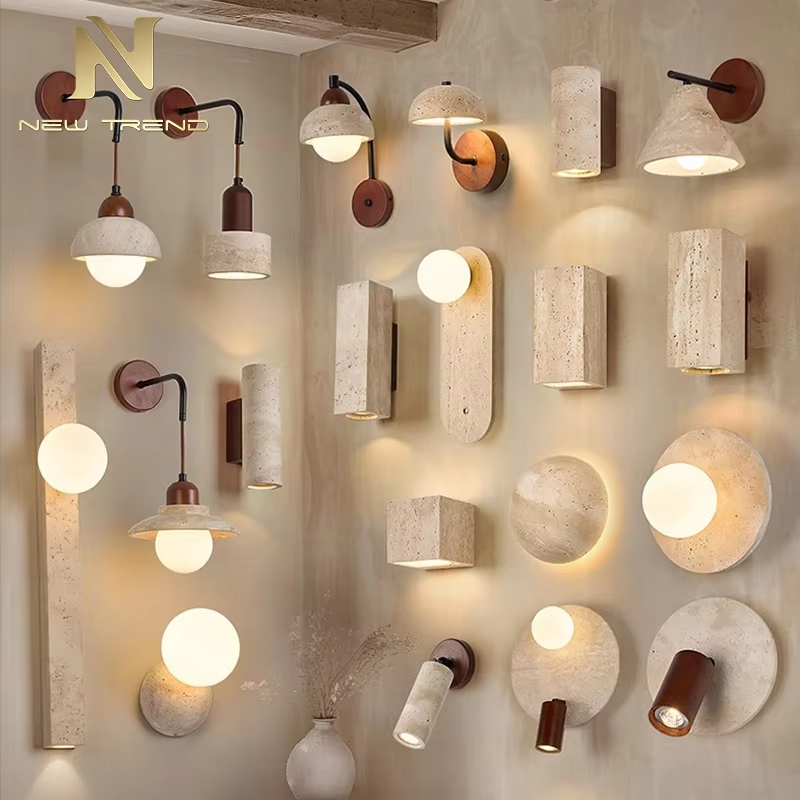
The lighting industry has witnessed significant transformation in recent years, with LED technology revolutionizing both performance standards and cost structures. Wholesale markets now offer unprecedented variety in ceiling and wall lamp designs, from minimalist contemporary fixtures to elaborate decorative pieces that serve as architectural focal points. Understanding the dynamics of wholesale pricing models enables project teams to leverage volume purchasing power while securing premium quality lighting solutions that enhance overall project value.
Effective budget optimization requires comprehensive analysis of total ownership costs, including initial procurement expenses, installation requirements, energy consumption patterns, and long-term maintenance considerations. Professional buyers who develop expertise in evaluating wholesale ceiling and wall lamps can identify opportunities for substantial cost savings while ensuring compliance with relevant building codes and performance specifications.
Understanding Wholesale Lighting Market Dynamics
Market Structure and Pricing Models
The wholesale lighting industry operates through complex distribution networks that connect manufacturers, importers, regional distributors, and end-users across multiple market segments. Pricing structures vary significantly based on order quantities, product categories, seasonal demand fluctuations, and supplier relationships. Wholesale ceiling and wall lamps typically offer 30-60% cost savings compared to retail channels when purchased in appropriate volumes, making bulk procurement strategies essential for large-scale projects.
Manufacturing locations play crucial roles in determining price points and availability timelines. Asian manufacturers dominate global production capacity for standard commercial fixtures, while European and North American suppliers focus on premium design segments and specialized applications. Understanding regional manufacturing strengths enables buyers to optimize sourcing strategies based on specific project requirements and budget parameters.
Technology advancement cycles significantly impact wholesale pricing patterns, with LED conversion driving substantial market disruption over the past decade. Early adopters of LED wholesale ceiling and wall lamps benefited from rapid price declines as production volumes increased and manufacturing efficiency improved. Current market conditions favor buyers seeking high-performance LED solutions at competitive wholesale prices.
Quality Assessment and Supplier Evaluation
Professional evaluation of wholesale suppliers requires systematic assessment of manufacturing capabilities, quality control processes, certification compliance, and customer service standards. Established wholesale distributors maintain comprehensive product testing facilities and provide detailed specification documentation to support informed purchasing decisions. Quality metrics should encompass photometric performance, construction materials, finish durability, and electrical safety compliance.
Supplier financial stability represents a critical factor in long-term procurement relationships, particularly for projects requiring ongoing maintenance support or future expansion phases. Reputable wholesale ceiling and wall lamps suppliers maintain adequate inventory levels, provide reliable delivery schedules, and offer comprehensive warranty coverage to protect buyer investments.
International trade considerations affect supplier selection processes, including import regulations, duty structures, shipping costs, and currency exchange rate fluctuations. Domestic wholesale suppliers often provide advantages in terms of delivery speed, customer service accessibility, and simplified warranty processing, while international sources may offer superior pricing for large-volume orders.
Strategic Procurement Planning for Large-Scale Projects
Volume Requirements and Order Timing
Successful wholesale procurement begins with accurate quantity forecasting based on detailed project specifications and installation schedules. Construction projects typically require multiple fixture types to accommodate different spaces and functional requirements, necessitating careful coordination between design teams and purchasing departments. Wholesale ceiling and wall lamps orders should account for installation breakage, future maintenance needs, and potential design modifications during construction phases.
Timing considerations significantly impact wholesale pricing opportunities, with seasonal demand patterns creating favorable purchasing windows for bulk orders. Manufacturing lead times vary considerably across product categories, with standard fixtures typically available within 2-4 weeks while custom designs may require 8-12 weeks for production and delivery. Early procurement planning enables buyers to capitalize on off-season pricing while ensuring timely project completion.
Progressive delivery schedules help manage cash flow requirements and storage logistics for large wholesale orders. Coordinating fixture deliveries with construction milestones reduces on-site storage costs and minimizes damage risks during extended project timelines. Professional project managers develop detailed procurement calendars that align wholesale ceiling and wall lamps deliveries with installation readiness dates.
Specification Optimization and Value Engineering
Design specifications significantly influence wholesale pricing options, with standardized fixtures offering substantial cost advantages over custom solutions. Value engineering processes identify opportunities to achieve design objectives through alternative fixture selections that maintain aesthetic integrity while reducing procurement costs. Collaborative relationships between design teams and wholesale suppliers facilitate creative problem-solving that benefits both budget constraints and project outcomes.
LED technology provides numerous opportunities for specification optimization, including dimming capabilities, color temperature selection, and advanced control integration. Modern wholesale ceiling and wall lamps incorporate smart features that enhance energy efficiency and user control while maintaining competitive pricing structures. Understanding the total cost implications of various technology options enables informed decision-making throughout the specification process.
Standardization strategies reduce procurement complexity and increase volume purchasing power by consolidating fixture types across multiple project areas. Selecting versatile designs that function effectively in various applications simplifies inventory management and maintenance procedures while maximizing wholesale pricing benefits.
Technology Integration and Performance Optimization
LED Efficiency and Control Systems
Contemporary wholesale ceiling and wall lamps incorporate advanced LED technology that delivers superior energy efficiency, extended operational life, and enhanced control capabilities compared to traditional lighting systems. Modern LED fixtures provide 80-90% energy savings relative to incandescent alternatives while offering 25,000-50,000 hours of operational life, significantly reducing long-term maintenance costs and replacement requirements.
Smart control integration enables sophisticated lighting management systems that optimize energy consumption based on occupancy patterns, daylight availability, and user preferences. Wholesale suppliers now offer comprehensive control packages that include dimming modules, occupancy sensors, and wireless connectivity options at competitive pricing levels. These integrated systems provide substantial operational savings that justify premium wholesale pricing for advanced fixture specifications.
Color temperature selection affects both energy efficiency and user comfort, with tunable white LED systems providing dynamic adjustment capabilities throughout daily cycles. Wholesale ceiling and wall lamps with circadian lighting features support occupant well-being while maintaining excellent energy performance characteristics that reduce operational costs over extended service periods.
Installation Efficiency and Maintenance Considerations
Modern wholesale lighting designs emphasize installation efficiency through modular construction, standardized mounting systems, and comprehensive installation documentation. Professional-grade fixtures include detailed installation guides, mounting templates, and electrical connection diagrams that reduce installation time and minimize contractor labor costs. Selecting wholesale ceiling and wall lamps with installation-friendly designs provides additional project savings beyond initial procurement costs.
Maintenance accessibility represents a crucial factor in long-term ownership costs, with well-designed fixtures providing easy access to LED modules, drivers, and control components. Wholesale suppliers increasingly offer modular replacement parts and comprehensive maintenance documentation to support efficient service procedures throughout fixture lifecycles.
Warranty coverage varies significantly across wholesale suppliers, with premium manufacturers typically providing 5-10 year comprehensive warranties that include LED modules, electronic components, and finish integrity. Extended warranty options provide additional protection for critical installations where lighting system reliability is essential for operational continuity.
Cost Analysis and Budget Optimization Strategies
Total Cost of Ownership Evaluation
Comprehensive cost analysis extends beyond initial wholesale pricing to encompass installation expenses, energy consumption, maintenance requirements, and end-of-life considerations. Professional evaluation of wholesale ceiling and wall lamps requires detailed calculations of lifecycle costs that include all operational expenses over projected service periods.
Energy cost projections play increasingly important roles in fixture selection decisions, with LED efficiency ratings directly impacting long-term operational expenses. Wholesale suppliers provide comprehensive photometric data and energy consumption specifications that enable accurate lifecycle cost modeling for various fixture options. Projects with extended operational periods benefit significantly from premium efficiency ratings despite higher initial wholesale pricing.
Installation cost variations depend on fixture complexity, mounting requirements, and electrical infrastructure compatibility. Standardized wholesale ceiling and wall lamps typically require minimal specialized installation procedures, while custom designs may necessitate additional structural modifications or electrical upgrades that increase total project costs.
Negotiation Strategies and Supplier Relationships
Effective wholesale negotiation requires thorough market research, competitive bidding processes, and strategic timing of purchase commitments. Established relationships with multiple wholesale suppliers provide leverage for competitive pricing while ensuring backup supply options for critical project timelines. Professional buyers maintain detailed supplier performance records that inform future sourcing decisions and negotiation strategies.
Volume commitments often unlock additional pricing tiers and preferential treatment from wholesale suppliers, particularly for repeat customers with consistent purchasing patterns. Long-term partnership agreements can provide price stability and priority allocation during supply constraints while ensuring access to new product introductions and technical support services.
Payment terms significantly impact project cash flow management, with wholesale suppliers offering various financing options including extended payment schedules, early payment discounts, and progressive billing arrangements. Optimizing payment structures provides additional cost savings opportunities while supporting overall project financial management objectives.
FAQ
What minimum order quantities typically apply for wholesale ceiling and wall lamps purchases
Most wholesale lighting suppliers establish minimum order quantities ranging from $1,000 to $5,000 for initial purchases, with established customers often receiving reduced minimums based on purchasing history. Specific product categories may have individual minimum requirements, particularly for imported fixtures or custom designs. Large-scale projects typically exceed minimum thresholds easily, while smaller buyers can often coordinate group purchases or work with distributors who maintain inventory for smaller orders.
How do lead times for wholesale orders compare to retail availability
Wholesale ceiling and wall lamps generally require 2-6 weeks for standard products, depending on supplier inventory levels and manufacturing schedules. Custom or specialized fixtures may require 8-16 weeks for production and delivery. Retail channels typically stock limited selections for immediate delivery but cannot match the variety and customization options available through wholesale channels. Professional project planning should account for extended lead times when developing construction schedules.
What quality certifications should buyers verify when selecting wholesale suppliers
Essential certifications include UL or ETL listing for electrical safety compliance, Energy Star certification for efficiency verification, and DLC qualification for utility rebate eligibility. International suppliers should provide CE marking for European compliance or equivalent regional certifications. Professional wholesale ceiling and wall lamps suppliers maintain current certification documentation and provide detailed product testing reports to support specification compliance verification.
How can buyers evaluate the long-term reliability of wholesale lighting suppliers
Supplier reliability assessment should include financial stability analysis, customer reference verification, facility inspections, and quality system audits. Established wholesale suppliers typically maintain industry association memberships, provide comprehensive warranty coverage, and demonstrate consistent delivery performance over multiple years. Professional buyers often develop preferred supplier lists based on documented performance metrics including delivery accuracy, product quality, and customer service responsiveness.
Table of Contents
- Understanding Wholesale Lighting Market Dynamics
- Strategic Procurement Planning for Large-Scale Projects
- Technology Integration and Performance Optimization
- Cost Analysis and Budget Optimization Strategies
-
FAQ
- What minimum order quantities typically apply for wholesale ceiling and wall lamps purchases
- How do lead times for wholesale orders compare to retail availability
- What quality certifications should buyers verify when selecting wholesale suppliers
- How can buyers evaluate the long-term reliability of wholesale lighting suppliers