EN
EN


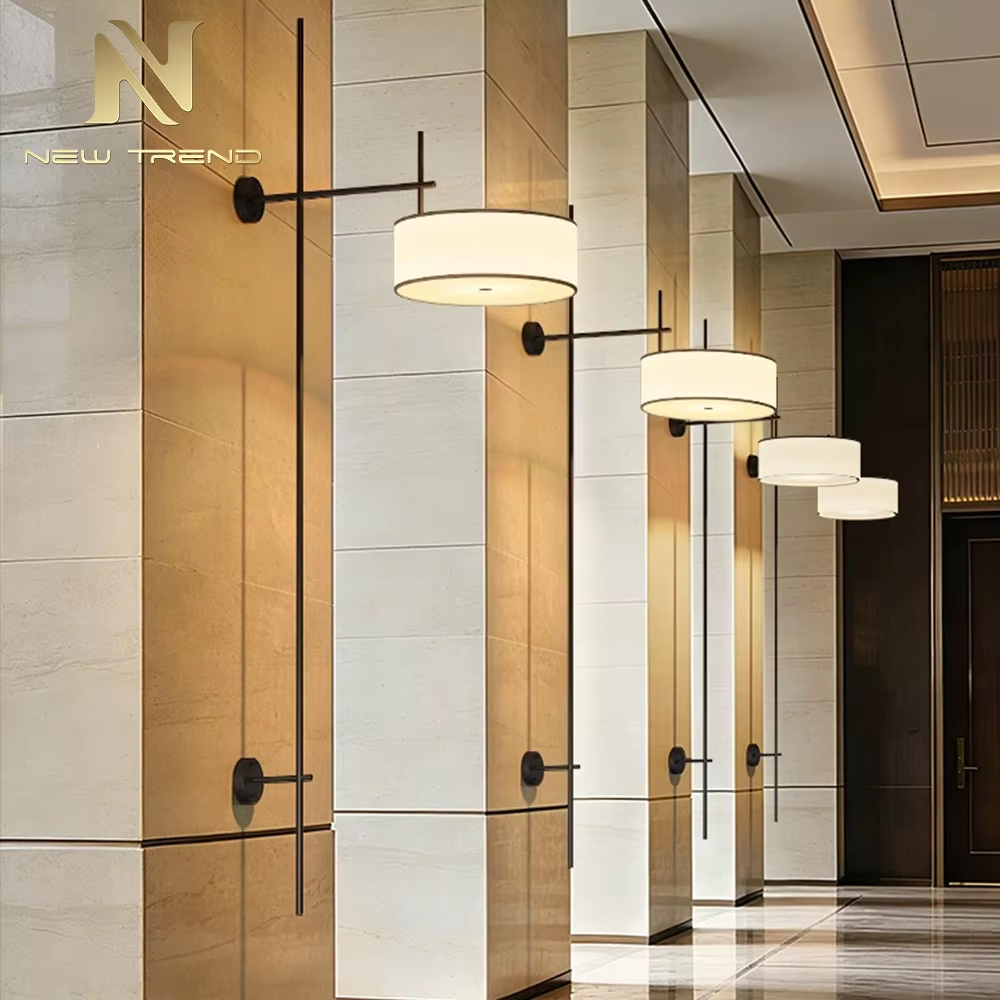
Public corridors and hallways in commercial buildings, educational institutions, healthcare facilities, and residential complexes require lighting solutions that combine exceptional durability with consistent performance. Selecting the right durable wall lamp manufacturer becomes a critical decision that impacts not only the initial installation quality but also long-term maintenance costs, energy efficiency, and occupant safety. When lighting designers, facility managers, and architects evaluate manufacturers for corridor and hallway applications, they must consider far more than product aesthetics—they need partners who understand the unique demands of high-traffic public spaces, comply with rigorous safety standards, and deliver luminaires engineered to withstand years of continuous operation without performance degradation.
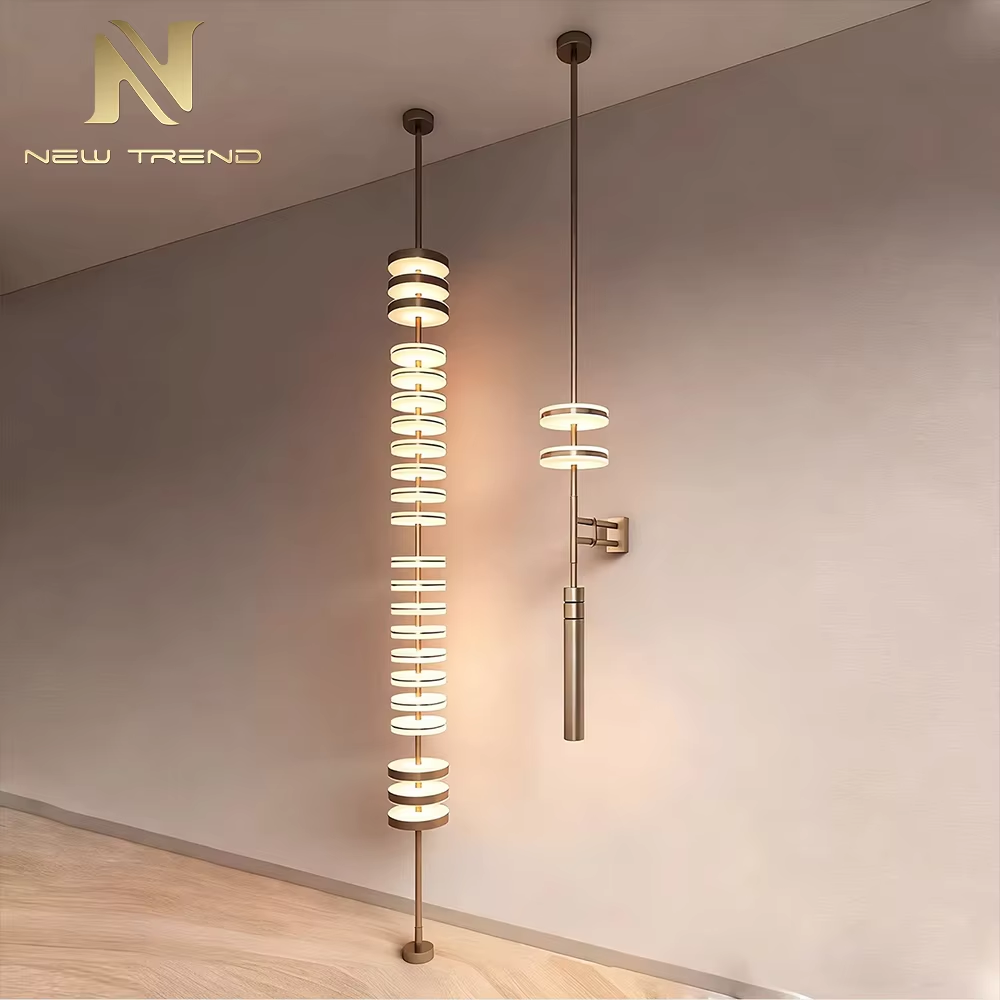
The distinction between a reliable durable wall lamp manufacturer and a generic supplier extends beyond product catalogs and price lists. Manufacturers specializing in public corridor lighting understand the operational challenges these environments present: constant vibration from foot traffic, exposure to cleaning chemicals, temperature fluctuations, vandalism risks, and the need for minimal maintenance intervention. This article explores the essential characteristics that define a quality manufacturer in this specialized segment, examines the technical specifications that matter most for corridor applications, and provides practical guidance for procurement professionals navigating the selection process. Whether you are retrofitting an existing facility or specifying lighting for new construction, understanding what sets exceptional manufacturers apart will ensure your investment delivers lasting value.
Engineering Standards That Define Manufacturing Excellence
Material Selection and Construction Quality
A reputable durable wall lamp manufacturer prioritizes material science as the foundation of product longevity. For public corridor applications, housing materials must resist impact, corrosion, and environmental stress. High-grade aluminum alloys with appropriate surface treatments provide excellent strength-to-weight ratios while resisting oxidation in humid environments. Some manufacturers employ die-cast aluminum housings with powder-coated finishes that meet ASTM B117 salt spray test standards, ensuring performance in coastal or industrial settings. The diffuser material selection equally impacts durability—polycarbonate diffusers offer superior impact resistance compared to acrylic alternatives, making them ideal for corridors where accidental contact or vandalism concerns exist.
Manufacturing processes directly influence structural integrity and long-term reliability. Quality manufacturers implement precision die-casting techniques that eliminate weak points and ensure consistent wall thickness throughout the housing. Sealed gasket systems with silicone or EPDM rubber prevent moisture ingress, which is particularly critical in corridors connecting to exterior spaces or in facilities with high humidity levels. The assembly methodology matters significantly—manufacturers using stainless steel fasteners and corrosion-resistant hardware demonstrate attention to component longevity that extends beyond the primary fixture body. When evaluating a durable wall lamp manufacturer, procurement professionals should inquire about material certifications, assembly processes, and quality control checkpoints that verify construction standards.
Electrical Component Reliability
The electrical architecture within corridor wall lamps directly determines operational lifespan and maintenance requirements. Leading durable wall lamp manufacturer partners utilize LED driver technology with power factor correction, thermal management systems, and surge protection that extends component life well beyond standard specifications. Driver placement within the fixture affects heat dissipation—manufacturers who position drivers away from LED arrays or incorporate heat sinks demonstrate sophisticated thermal engineering. The driver warranty period often serves as a reliable indicator of manufacturer confidence in component quality, with industry-leading suppliers offering five to ten-year driver warranties for commercial applications.
Wiring and connection systems within durable corridor fixtures must accommodate installation variations while maintaining electrical safety. Quality manufacturers provide terminal blocks rated for the appropriate wire gauge and current load, with strain relief mechanisms that prevent conductor fatigue over time. Some advanced manufacturers incorporate modular electrical designs that enable field replacement of drivers or LED modules without complete fixture removal, significantly reducing maintenance labor costs. The electrical certifications a manufacturer holds—such as UL listing, ETL certification, or DLC qualification—provide objective verification of safety standards and performance claims. When sourcing from a durable wall lamp manufacturer, specification documents should clearly detail electrical ratings, component brands, and applicable safety certifications to ensure transparency and accountability.
Optical Engineering for Corridor Applications
Corridor lighting presents unique optical challenges that generic wall lamps cannot adequately address. A specialized durable wall lamp manufacturer develops optical systems specifically designed for elongated spaces with varying ceiling heights and wall reflectance characteristics. Asymmetric optics that direct light preferentially along the corridor length maximize spacing ratios and reduce the total fixture count required for code compliance. Some manufacturers offer selectable beam angles or field-adjustable optics that accommodate different corridor widths without requiring multiple product SKUs, simplifying inventory management and providing installation flexibility.
Glare control becomes particularly important in corridor environments where occupants transition between differently illuminated spaces. Quality manufacturers incorporate shielding mechanisms, diffuser designs, or recessed LED positioning that limits direct view of the light source while maintaining adequate illumination levels. The Unified Glare Rating or BUG rating of a fixture provides quantifiable metrics for evaluating optical performance. A durable wall lamp manufacturer committed to corridor applications will provide photometric data demonstrating compliance with illumination standards such as IESNA recommendations for commercial corridors, typically specifying minimum maintained illuminance levels between 5 and 10 foot-candles depending on building type and occupancy classification.
Manufacturing Capabilities That Support Project Success
Customization and Application Engineering
Public corridor projects often present unique architectural requirements, code compliance needs, or aesthetic preferences that standard catalog products cannot fully satisfy. A capable durable wall lamp manufacturer maintains engineering resources to modify standard designs or develop custom solutions without compromising structural integrity or electrical safety. This capability extends beyond simple finish color changes to include dimensional modifications, mounting configurations, control integration, and emergency lighting functionality. Manufacturers with in-house design teams can provide CAD drawings, photometric simulations, and prototype development that de-risk specification decisions and ensure the final product meets all project requirements.
The responsiveness of a durable wall lamp manufacturer to application-specific questions during the specification phase often predicts their support quality throughout the project lifecycle. Manufacturers who assign dedicated project coordinators, provide detailed submittal documentation, and offer pre-installation technical support demonstrate a customer-centric approach that extends beyond transactional product sales. Some manufacturers maintain mockup facilities where specifiers can evaluate products under simulated installation conditions, providing valuable insight before final specification. The ability to provide photometric layouts tailored to specific corridor dimensions and reflectance characteristics represents a value-added service that distinguishes sophisticated manufacturers from commodity suppliers.
Quality Assurance and Testing Protocols
Manufacturing quality consistency separates reliable suppliers from those who deliver inconsistent performance across production batches. A reputable durable wall lamp manufacturer implements documented quality management systems—often ISO 9001 certified—that establish testing protocols at multiple production stages. Incoming material inspection, in-process verification, and final product testing ensure that each fixture meets published specifications before shipment. Photometric testing in IESNA or CIE-compliant integrating spheres verifies lumen output and color characteristics, while electrical safety testing confirms insulation resistance, ground continuity, and hi-pot performance.
Environmental stress testing provides critical validation of durability claims. Leading manufacturers subject products to accelerated life testing, thermal cycling, humidity exposure, and vibration testing that simulates years of operational conditions. The willingness of a durable wall lamp manufacturer to share testing reports, provide sample units for independent verification, or submit products for third-party certification demonstrates confidence in manufacturing quality. Some manufacturers participate in Design Lights Consortium technical requirements or ENERGY STAR certification programs that require ongoing quality verification and performance monitoring. When evaluating manufacturers, procurement professionals should request documentation of testing methodologies, quality control checkpoints, and any third-party certifications that validate performance claims.
Supply Chain Stability and Production Capacity
Project timelines and budget constraints require manufacturers with reliable supply chains and adequate production capacity to meet delivery commitments. A financially stable durable wall lamp manufacturer maintains relationships with multiple component suppliers, holds strategic inventory of long-lead items, and operates production facilities with capacity buffers that accommodate order fluctuations. Manufacturing location affects lead times, logistics costs, and communication efficiency—some projects benefit from domestic manufacturing that enables rapid prototyping and reduces shipping complexities, while others prioritize cost optimization through offshore production with established quality control systems.
The production scalability of a manufacturer determines their suitability for projects of varying sizes. A durable wall lamp manufacturer with automated assembly processes and established quality systems can efficiently handle large-volume orders while maintaining consistent quality, whereas smaller manufacturers may offer superior customization capabilities for boutique projects with specialized requirements. Transparency regarding production capacity, typical lead times, and expediting capabilities enables realistic project scheduling. Manufacturers who provide order status visibility, proactive communication regarding potential delays, and contingency planning support demonstrate operational maturity that reduces project risk. Understanding a manufacturer's supply chain resilience becomes particularly important during periods of component shortages or logistics disruptions that can impact project timelines.
Technical Specifications Critical for Corridor Applications
Lumen Maintenance and Color Stability
Long-term photometric performance determines the true cost of ownership for corridor lighting installations. A quality durable wall lamp manufacturer specifies products using L70 or L80 metrics that predict the operational hours before light output degrades to 70% or 80% of initial lumens. For commercial corridors, fixtures with L70 ratings exceeding 50,000 hours minimize relamping frequency and associated labor costs. The LED chipset selection and thermal management design directly influence lumen maintenance—manufacturers using branded LED packages from Tier 1 suppliers typically deliver more predictable performance than those using unbranded components.
Color consistency across fixtures and over time impacts visual comfort and aesthetic quality in corridor environments. A reputable durable wall lamp manufacturer provides products with specified color temperature tolerances, typically within 3-step MacAdam ellipses, ensuring minimal variation between fixtures. Color Rendering Index above 80 CRI is generally appropriate for corridor applications, providing adequate color discrimination for wayfinding and safety. Some manufacturers offer color temperature selection options—3000K, 3500K, or 4000K—allowing designers to match existing lighting or create desired ambiance. The color shift over time, quantified by the change in chromaticity coordinates, should remain within acceptable limits defined by ANSI C78.377 standards. When evaluating a durable wall lamp manufacturer, requesting documentation of lumen maintenance projections and color consistency specifications enables informed comparison between options.
Impact Resistance and Vandalism Protection
Public corridors in educational facilities, transportation terminals, and multi-family housing face elevated risks of accidental or intentional fixture damage. A durable wall lamp manufacturer serving these markets designs products with appropriate impact resistance ratings verified through standardized testing. IK ratings, defined by IEC 62262 standards, quantify impact resistance from IK01 through IK10, with IK08 or higher recommended for high-risk environments. This rating corresponds to withstanding impact energy from a specified mass dropped from a defined height, providing objective measurement of fixture robustness.
Vandalism resistance extends beyond impact strength to include tamper-resistant fasteners, secure mounting systems, and absence of removable components accessible from the corridor side. Some manufacturers incorporate polycarbonate shields or wire guards that protect diffusers without significantly compromising light distribution. The mounting methodology affects vulnerability—fixtures with concealed mounting hardware and direct attachment to wall studs or masonry resist removal attempts more effectively than surface-mounted options with exposed fasteners. A durable wall lamp manufacturer experienced in institutional applications understands these vulnerabilities and engineers products with appropriate protective features. Specification documents should clearly state IK ratings, mounting security features, and any optional protective accessories available for high-risk installations.
Environmental Sealing and Contamination Resistance
Corridor environments vary significantly in environmental exposure, from climate-controlled interior spaces to semi-exterior transition areas subject to temperature extremes and moisture. A versatile durable wall lamp manufacturer offers products with appropriate Ingress Protection ratings that match application requirements. IP65-rated fixtures provide protection against dust ingress and low-pressure water jets, suitable for corridors with washdown maintenance or exterior exposure. Interior applications typically require minimum IP20 ratings, protecting against solid objects larger than 12.5mm while allowing adequate ventilation for thermal management.
Chemical resistance becomes critical in healthcare corridors, food processing facilities, and industrial settings where cleaning protocols involve aggressive disinfectants or solvents. Housing materials and finishes must resist degradation from repeated exposure to these agents. A quality durable wall lamp manufacturer tests finishes against common cleaning chemicals and provides guidance on compatible maintenance procedures. Gasket materials must maintain sealing integrity despite chemical exposure and thermal cycling. Some manufacturers offer fixtures with antimicrobial finishes or smooth surfaces that facilitate cleaning without texture-trapping contaminants. When specifying for environments with stringent hygiene requirements or harsh cleaning protocols, confirming the chemical resistance and cleanability characteristics with the manufacturer prevents premature finish degradation or seal failure.
Procurement Considerations and Manufacturer Evaluation
Total Cost of Ownership Analysis
Initial fixture cost represents only one component of the total financial impact of corridor lighting decisions. A sophisticated durable wall lamp manufacturer provides tools and data enabling life-cycle cost analysis that accounts for energy consumption, maintenance labor, replacement parts, and expected service life. Energy efficiency, quantified in lumens per watt, directly impacts operational costs over the fixture's lifetime. Products delivering 120-140 lumens per watt significantly reduce electricity consumption compared to older fluorescent or HID systems, with energy savings often recovering the initial premium for high-efficiency fixtures within three to five years.
Maintenance cost projections depend on component reliability, accessibility for service, and replacement part availability. A durable wall lamp manufacturer offering modular designs with field-replaceable drivers or LED arrays reduces maintenance labor compared to sealed units requiring complete fixture replacement. The manufacturer's parts inventory commitment and availability of replacement components years after initial purchase protects against obsolescence risks. Some manufacturers provide extended warranty options or preventive maintenance programs that provide cost certainty and budget predictability. When comparing options from different suppliers, developing a standardized total cost of ownership model that incorporates energy rates, maintenance labor costs, expected failure rates, and replacement expenses enables objective comparison beyond initial purchase price.
Technical Support and Documentation Quality
Comprehensive technical documentation facilitates accurate specification, proper installation, and effective maintenance throughout the product lifecycle. A professional durable wall lamp manufacturer provides detailed specification sheets including complete photometric data, electrical characteristics, dimensional drawings, and installation instructions. BIM objects or Revit families enable seamless integration into design workflows, while IES files allow photometric modeling in lighting design software. The clarity and completeness of this documentation reflects the manufacturer's organizational maturity and commitment to customer success.
Technical support accessibility becomes critical when application questions arise during specification, installation challenges occur, or troubleshooting assistance is needed. Manufacturers with knowledgeable technical staff available through multiple communication channels—phone, email, online chat—demonstrate customer service commitment. Some manufacturers maintain online resource libraries with installation videos, specification guides, and application notes that provide self-service support. The responsiveness to technical inquiries during the evaluation phase often predicts support quality after purchase. A durable wall lamp manufacturer viewing customer relationships as long-term partnerships rather than transactional sales provides value extending far beyond the physical product. When evaluating manufacturers, testing their technical support responsiveness and documentation quality during the specification phase provides insight into the ongoing relationship quality.
Sustainability and Environmental Responsibility
Environmental considerations increasingly influence procurement decisions in public and private sectors. A forward-thinking durable wall lamp manufacturer embraces sustainability through multiple operational aspects: energy-efficient product designs, responsible material sourcing, waste reduction in manufacturing processes, and end-of-life product recyclability. Products qualifying for ENERGY STAR certification or Design Lights Consortium listing meet verified efficiency thresholds and contribute to LEED credits in green building projects. Some manufacturers publish Environmental Product Declarations quantifying lifecycle environmental impacts according to ISO 14025 standards, providing transparent data for environmental assessment.
Material selection impacts environmental footprint and recyclability. Manufacturers using recyclable aluminum housings, minimizing plastic components, and avoiding hazardous materials facilitate responsible disposal at end of service life. RoHS compliance and absence of mercury or lead in manufacturing processes reflect commitment to environmental protection. Some manufacturers implement take-back programs or provide guidance on proper disposal procedures. Carbon footprint disclosure, including embodied energy in manufacturing and transportation impacts, enables environmentally conscious procurement decisions. A durable wall lamp manufacturer committed to sustainability views environmental responsibility as integral to business operations rather than marketing differentiation, implementing measurable initiatives that reduce environmental impact while delivering superior product performance.
FAQ
What warranty coverage should I expect from a reputable durable wall lamp manufacturer for corridor applications?
Industry-leading manufacturers typically provide five-year limited warranties covering defects in materials and workmanship for commercial corridor fixtures, with some offering extended warranties up to ten years for premium product lines. The warranty should explicitly cover the LED arrays and drivers, as these components represent the highest failure risk. Quality manufacturers stand behind their products with straightforward warranty claim processes, reasonable response times, and clear coverage terms that specify what is included and any exclusions. Some manufacturers offer extended warranty options for an additional cost, which can provide budget certainty for facility managers planning long-term maintenance costs. Always review warranty terms carefully, noting coverage duration, what specifically is protected, claim procedures, and whether labor costs for replacement are included or limited to product replacement only.
How do I verify that a durable wall lamp manufacturer truly delivers the performance specifications they claim?
Requesting third-party test reports from accredited laboratories provides independent verification of manufacturer claims. Look for photometric testing from labs compliant with IESNA LM-79 standards for LED products, which document actual lumen output, efficacy, power consumption, and color characteristics. Lumen maintenance projections should reference LM-80 testing data and TM-21 calculation methodologies. Safety certifications from UL, ETL, or other nationally recognized testing laboratories confirm electrical safety and construction standards. For projects with significant investment, consider requesting sample units for independent testing or observation under actual installation conditions. Manufacturers confident in their product quality typically welcome such scrutiny and may provide evaluation samples. Additionally, requesting and contacting references from similar installations provides real-world performance feedback that supplements laboratory data.
What lead times should I plan for when ordering corridor lighting from a durable wall lamp manufacturer?
Lead times vary significantly based on product complexity, order volume, customization requirements, and manufacturer production capacity. Standard catalog products from established manufacturers typically ship within two to six weeks for moderate quantities, while custom configurations or large orders may require eight to twelve weeks or longer. Domestic manufacturers often provide shorter lead times compared to overseas suppliers, though this varies by specific manufacturer and product line. During the specification phase, discussing project timelines with potential manufacturers enables realistic scheduling and identifies any long-lead components requiring advance ordering. Some manufacturers maintain inventory of popular configurations or offer expedited production for time-sensitive projects at premium pricing. Building buffer time into project schedules accommodates potential delays from component shortages, shipping disruptions, or unforeseen manufacturing issues. Establishing clear delivery expectations in purchase orders and maintaining communication throughout production helps ensure on-time delivery aligned with installation schedules.
Can a durable wall lamp manufacturer provide emergency lighting functionality integrated into corridor fixtures?
Many manufacturers offer corridor wall lamps with integrated emergency battery backup systems that maintain illumination during power outages, eliminating the need for separate emergency fixtures. These integrated solutions typically provide a specified lumen output for a minimum duration—commonly 90 minutes—as required by building codes and life safety standards. The emergency driver may maintain full light output or operate at reduced output sufficient for safe egress. Some manufacturers offer self-testing emergency drivers that automatically verify battery and lamp functionality, reducing maintenance burden and ensuring code compliance. When specifying emergency functionality, confirm that the manufacturer's solution meets applicable electrical codes, NFPA 101 Life Safety Code requirements, and local jurisdiction standards. Integration of emergency functionality adds complexity and cost but simplifies installation, reduces fixture count, and provides more aesthetically cohesive corridor appearance compared to separate standard and emergency fixtures. Verify warranty coverage specifically addresses emergency components, as battery systems have finite service lives and may require periodic replacement.
Table of Contents
- Engineering Standards That Define Manufacturing Excellence
- Manufacturing Capabilities That Support Project Success
- Technical Specifications Critical for Corridor Applications
- Procurement Considerations and Manufacturer Evaluation
-
FAQ
- What warranty coverage should I expect from a reputable durable wall lamp manufacturer for corridor applications?
- How do I verify that a durable wall lamp manufacturer truly delivers the performance specifications they claim?
- What lead times should I plan for when ordering corridor lighting from a durable wall lamp manufacturer?
- Can a durable wall lamp manufacturer provide emergency lighting functionality integrated into corridor fixtures?